InfinitySPM

5 Revenue Performance Metrics Every Enterprise Must Track

For mid-market and enterprise organizations, tracking revenue performance has traditionally been a game of inspecting the CRM. Revenue Operations (RevOps) and Sales Operations teams obsess over pipeline coverage, win rates, and activity metrics like calls made or emails sent.
While those metrics are helpful for understanding what sellers are doing, they fail to answer the most critical question for the executive board: Are we driving efficient, profitable growth? When organizations rely solely on CRM metrics, they suffer from the Revenue Blind Spot. Sales leadership celebrates closing deals, while Finance struggles with shrinking margins, unexpected commission overruns, and misaligned sales capacity. To bridge this gap, organizations must adopt a Revenue Performance Management (RPM) operating model. RPM unifies financial planning, territory and quota management (TQM), and incentive compensation management (ICM) onto a single, governed data foundation. To truly measure the health of a unified revenue engine, FP&A analysts, RevOps leaders, and executive teams need to move beyond basic activity tracking. Here are the five revenue performance metrics every enterprise must track to ensure Finance and Go-To-Market (GTM) teams operate from the same truth.

Sales Capacity vs. Financial Plan Variance

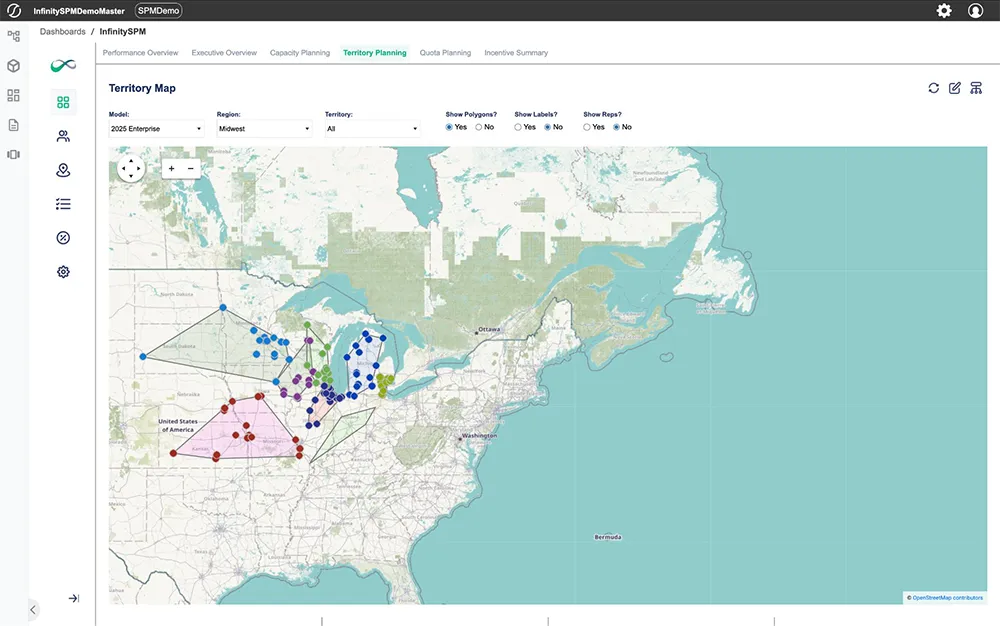
The greatest revenue plans in the world will fail if the field lacks the capacity to execute them. In siloed organizations, Finance builds the Annual Operating Plan (AOP) based on growth targets, while Sales builds capacity plans based on current headcount and optimistic hiring schedules. When these two plans diverge, the business cannot hit its targets.

What it Measures

This metric tracks the delta between the revenue commitments made in the financial plan and the actual, deployable sales capacity in the field. It takes into account open territories, headcount attrition, and unassigned quotas.

Why RPM Makes it Possible

Traditional Sales Performance Management (SPM) platforms handle quotas but struggle to tie them dynamically back to the AOP. True RPM integrates the financial AOP directly with sales capacity and incentive planning. By tracking this variance on a unified platform, Finance and Sales can immediately spot coverage gaps and evaluate trade-offs using shared assumptions before revenue is compromised.
True Rep Ramp-to-Value

Many organizations track “time-to-first-deal” to measure how quickly new sales hires become productive. However, landing a single, heavily discounted deal does not mean a rep has reached sustainable productivity.

What it Measures

True Rep Ramp-to-Value measures how long it takes for a new seller to generate enough margin-positive revenue to offset the costs of their recruitment, onboarding, base salary, and initial commission draws.

The Finance/Sales Friction

Source data shows that Finance and Sales frequently have a hard time agreeing on this exact metric. Sales wants to shorten the perceived ramp time to justify more headcount, while Finance wants a realistic view of when that headcount becomes profitable.

Why RPM Makes it Possible

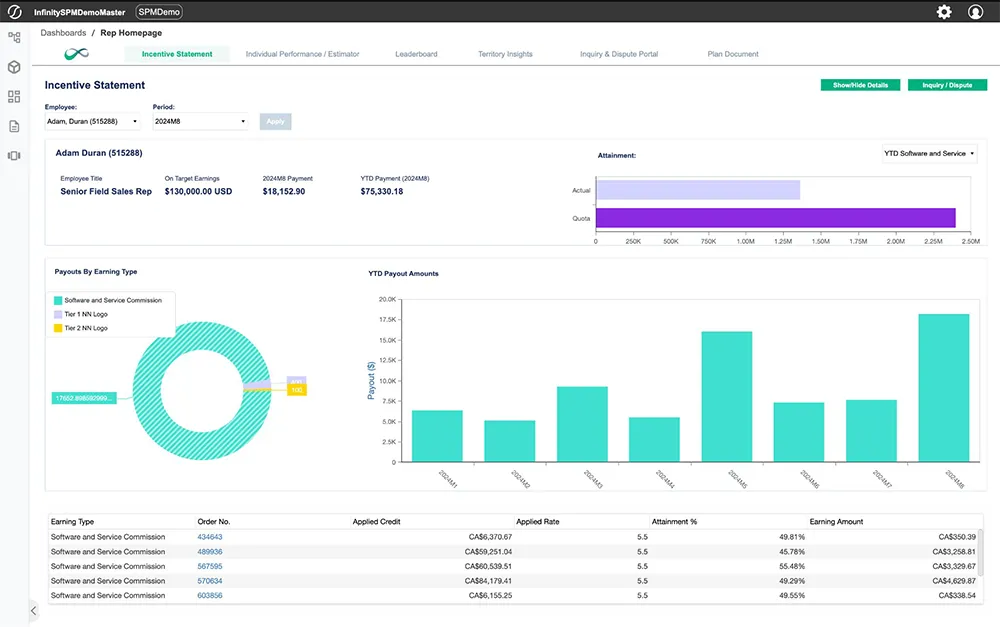
Because RPM connects territory design, quota setting, and incentive logic into one model, organizations can track a seller’s true financial impact. Furthermore, by leveraging AI-powered sales persona clustering built on trusted data, leaders can uncover repeatable performance patterns. This allows them to replicate top behaviors, target coaching, and systematically decrease the ramp-to-value timeline.

Cost-to-Serve and Margin Impact

Not all revenue is created equal. A $100,000 deal that requires massive pre-sales engineering, heavy post-sales support, and maximum commission payouts is fundamentally different from a $100,000 deal closed efficiently through a self-serve or low-touch channel.

Commission Expense and Leakage (Simulated vs. Actual)

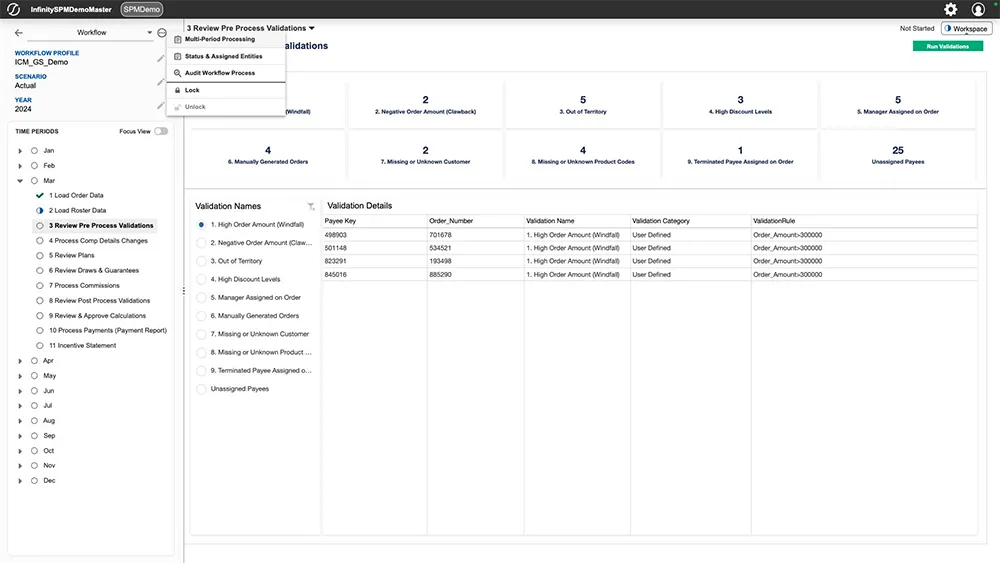
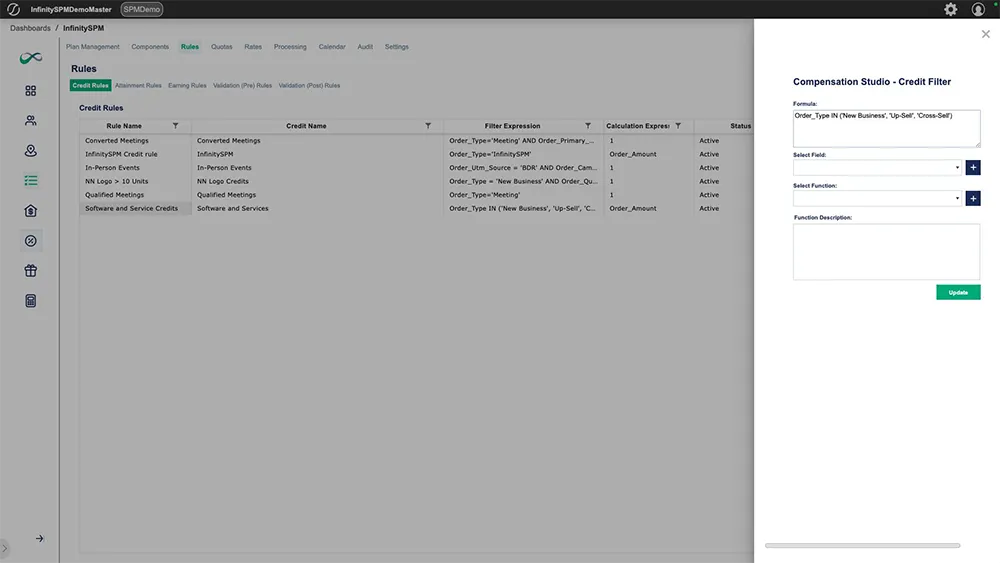
Variable compensation is often the single largest GTM expense for an enterprise. Yet, compensation administrators are frequently forced to manage it using fragmented workflows, disconnected spreadsheets, and manual shadow accounting.

Predictive Pipeline Risk (AI-Driven)

Looking at the current pipeline size is a lagging indicator; it tells you what sellers hope will happen based on subjective CRM entries. To proactively manage revenue, enterprises must identify risk before the quarter ends.

Moving from Tracking Activities to Governing Outcomes

The shift from legacy sales management to true Revenue Performance Management is defined by a shift in what a business chooses to measure. When you track activities, you get busy sellers. When you track unified revenue metrics, like capacity variance, margin impact, and simulated commission expenses, you get an aligned, efficient, and highly profitable enterprise. By utilizing RPM to eliminate the Revenue Blind Spot, organizations can ensure that their overarching financial plans, territory execution, and incentive compensation are all driving toward the exact same business outcomes.

Drive Revenue. Align Teams. Succeed with SPM on OneStream

Get in touch today to unlock the full potential of your sales performance management with the infinitySPM Solution.