
As organizations scale their go-to-market (GTM) motions, the technology required to manage revenue naturally becomes more complex. For revenue operations, sales leaders, and finance teams, navigating the acronyms, ICM, SPM, and RPM, can be confusing.
Are they different names for the same software? Are they sequential steps?
To clarify: Incentive Compensation Management (ICM), Sales Performance Management (SPM), and Revenue Performance Management (RPM) represent a direct evolutionary path. Understanding the difference between these three categories is the first step in diagnosing why your organization might be suffering from a “Revenue Blind Spot,” and how to fix it.
Here is the definitive guide to understanding the revenue ecosystem, how these categories interact, and why modern enterprises are shifting toward a holistic RPM model.
Optimize your sales engine with smart territories, data-driven quotas, and advanced scoring. Align resources, track performance, and turn insights into revenue.
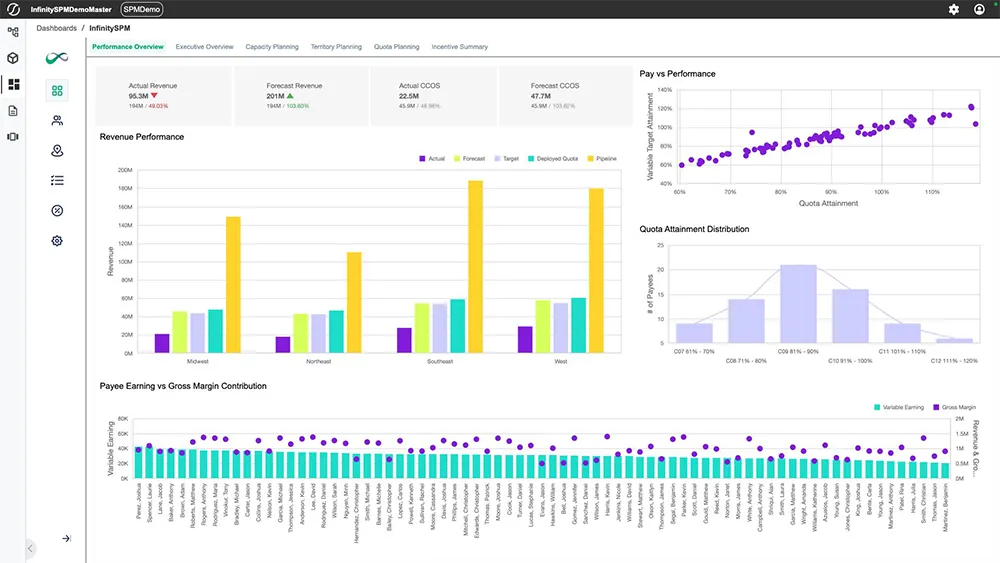
Read our complete Intro to Incentive Compensation Management for a deeper dive into this topic.
At its core, ICM is about accuracy, trust, and targeted behavior. Historically, organizations manage commissions in spreadsheets, which leads to manual reconciliation, shadow accounting, and profound operational drag.
Core Capabilities of ICM:
The Limitation: While ICM is critical, it is highly reactive. If managed in a silo, incentive logic sits outside the broader revenue model, creating weak visibility into how commission costs impact overall gross margins.
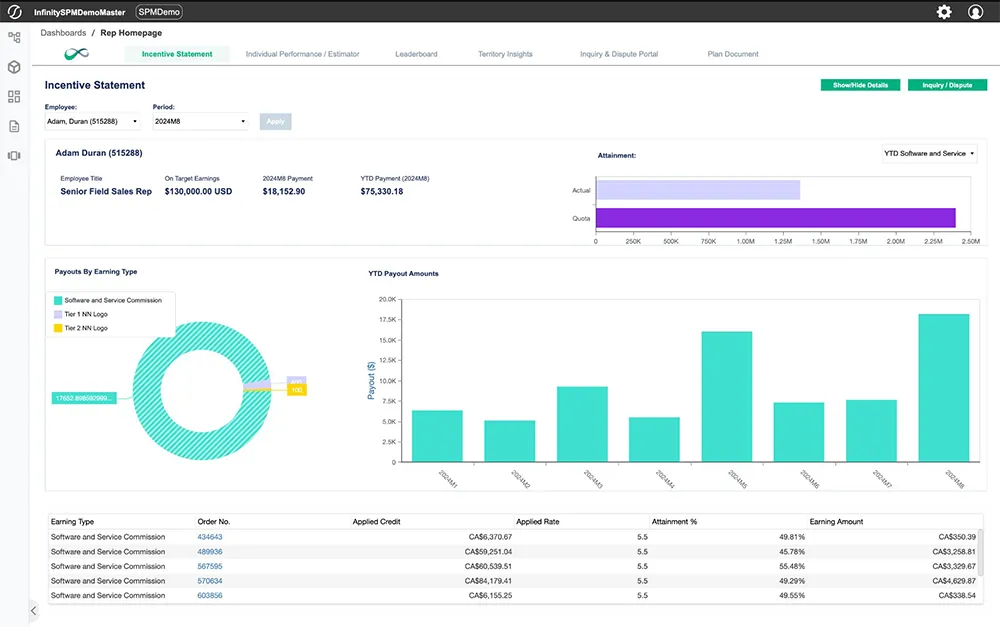
Read “What is Sales Performance Management: A CFO’s Perspective” to understand how finance views SPM.
SPM takes the foundational mechanics of ICM and wraps them in a go-to-market execution strategy. Traditional SPM moves beyond simply paying the reps to strategically deploying them.
Core Capabilities of SPM (Revenue Excellence):
The Limitation: The market still approaches revenue through separate categories. Traditional SPM vendors remain heavily concentrated in the administration of these tasks, often with limited workflow depth and weak linkage back to the corporate financial plan. SPM optimizes the sales team, but it doesn’t inherently bridge the gap to the finance team.
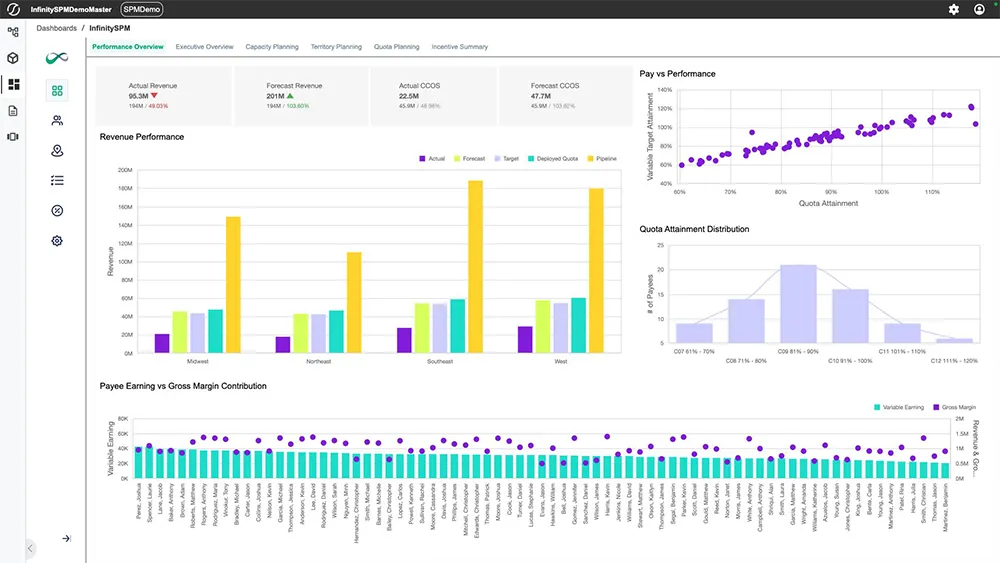
RPM addresses a massive business problem that SPM and ICM cannot solve alone: The Revenue Blind Spot. When planning, territory assignments, incentives, and revenue insights are managed in separate systems, leaders only see fragments of performance. The CFO and CRO operate on different datasets, making it impossible to adjust GTM strategies when market shifts occur.
RPM extends the strong foundation of financial planning and margin analysis across the broader revenue operating cycle.
Core Capabilities of RPM:
| Capability / Focus | Incentive Compensation (ICM) | Sales Performance (SPM) | Revenue Performance (RPM) |
|---|---|---|---|
| Primary Goal | Calculate and administer variable pay accurately. | Optimize sales execution and deploy quotas/territories. | Align financial planning with GTM execution and insights. |
| Primary Users | Compensation Admins, Sales Ops. | Sales Ops, RevOps, Sales Leadership. | CFO, CRO, FP&A, RevOps, Enterprise Leadership. |
| Core Functions | Commission calculations, crediting, payout workflows. | TQM, quota setting, account segmentation, + ICM. | Unified corporate planning, AI insights, governed data, + SPM. |
| Data Scope | CRM data, payroll data. | CRM data, HR data, sales capacity data. | Enterprise-wide governed data (Finance, CRM, HR, ERP). |
| Business Impact | Reduces overpayments and administration time. | Increases sales productivity and territory yield. | Eliminates the Revenue Blind Spot, protects margins, ensures agile GTM. |
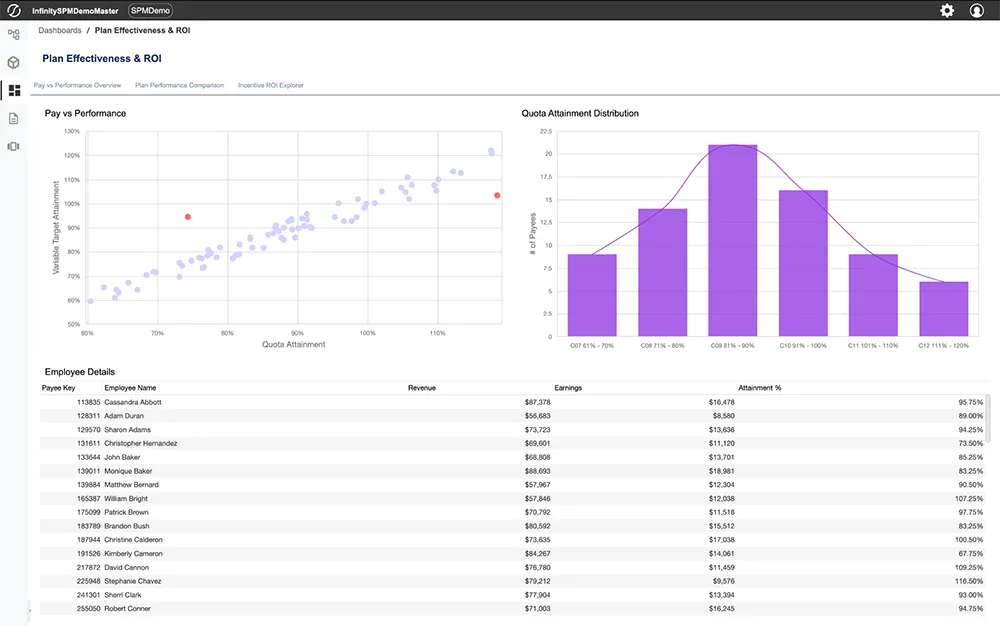
Get in touch today to unlock the full potential of your sales performance management with the infinitySPM Solution.